So how do you transform a plan for a 20-page story into one for a novel? My intention had been to give myself pleasure by writing "in the style of" 50 years after I had first tried it, to write a kind of Nick-Adams-Story about this unaccounted week. On the one hand, I had Gerry Brenner’s essay about James Gamble; on the other hand, I had found out that Taormina back then had been a haven for Northern European homosexuals for 40 years. Oscar Wilde fled to Taormina after being released from Reading prison; the Duke of Bronté and the English painter Robert Hawthorn Kitson, the owner of now Unesco Heritage site Casa Cuseni, Hemingway’s and Gamble’s hosts in December 1918, had been notorious homosexuals. But I didn’t want to paint Hemingway and Gamble as homosexuals - I had discovered the sociological concept of homosociality, which explains much better what might have happened during that week and reads as if it had been thought up with Hemingway in mind.
For a novel, though, this episode had to be embedded in a larger context. But how do you write a novel about Ernest Hemingway? Certainly not by writing "in the style of." You can parody Hemingway ("This is my last and best and true and only meal, thought Mr. Pirnie as he descended at noon and swung east on the beat-up sidewalk of Forty-fifth Street." —E.B. White) but you cannot imitate him just as you can’t imitate any of the great voices of literature. You cannot bring a writer like Hemingway or Joyce or Woolf into a novel and make them act and talk as Hemingway or Joyce or Woolf would have acted and talked.
There are examples of novels which try to do it; I have read them and they all sound utterly ridiculous or, as Hemingway would have said: "phony."
Furthermore, as I write in German, I would not have sounded like bad Hemingway but like bad Annemarie Horschitz, his translator from Berlin.
One great example of how to write about a legend is Thomas Mann’s The Beloved Returns. It narrates the visit of the elderly Lotte from "Werther" to Weimar to meet her erstwhile beau Goethe once again. But Goethe doesn’t appear. Lotte talks to his environment—friends, collaborators, his son—and all tell her their version of Goethe. Thus a very unflattering portrait of the genius is given mirror inverted or, as Hemingway would have said, by remate.
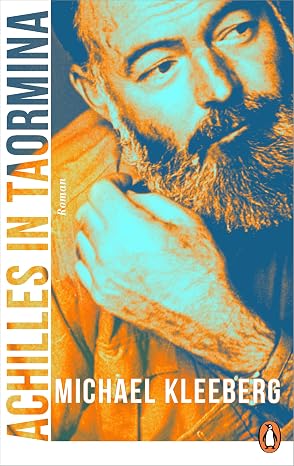
By creating a Hemingway scholar as narrator (and distorted clone of Hemingway), I could make him meet people who had known the writer and tell their versions of him or even quote him and thus cast a light on many aspects of Hemingway’s life and work that have undergone shifts of interpretation in the years since his death.
This procedure enabled me to tackle themes like Hemingway the closeted intellectual, Hemingway and remorse, Hemingway and androgyny, Hemingway and the struggle with his own femininity, and thus show that he and his work are still relevant in 2026, even if for completely different reasons than a hundred or fifty years ago.
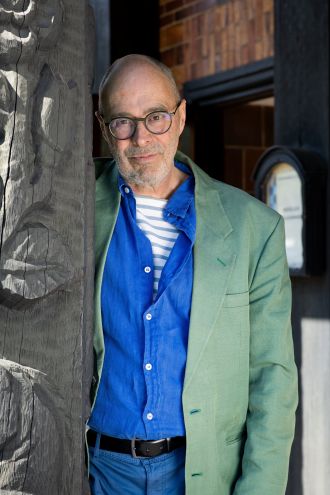
German author Michael Kleeberg has published more than a dozen books. He received the Literature Prize from the Konrad Adenauer Foundation in 2016 for his life’s work. Kleeberg will discuss his fiction and read from his 2026 novel, Achilles in Taormina, which was inspired by Ernest Hemingway, at the 2026 Hemingway Society Conference in Toronto.